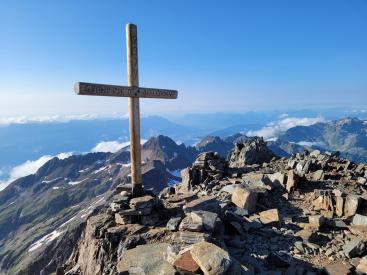
Understanding and protecting the Grand Pic de Belledonne and the Freydane Glacier
Mountain Wilderness
Sainte-Agnès (Grésivaudan) & Allemond (Oisan)
7 000€
-
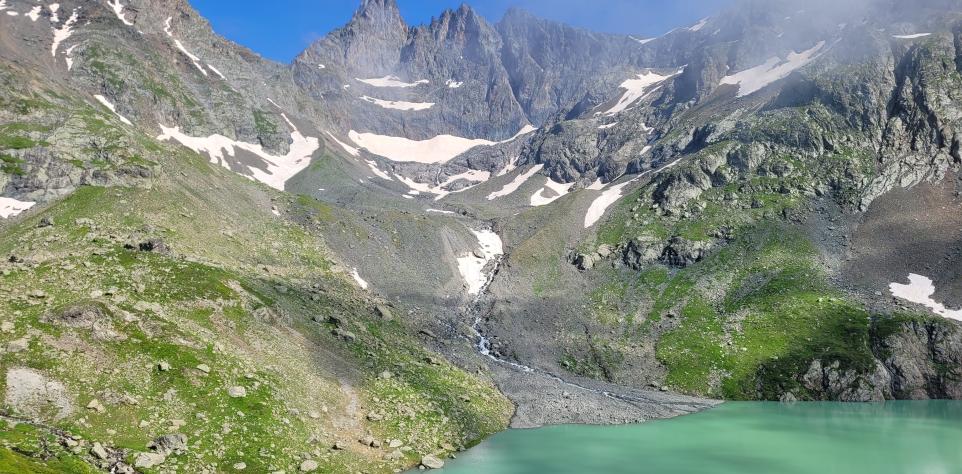
Safeguarding mountain ecosystems that are being profoundly transformed by climate change.
Titre
Mountain Wilderness
Paragraphe
Mountain Wilderness is an independent non-profit organization dedicated to protecting and promoting the unique character, beauty, and ecological richness of mountain environments. Recognized as a public-interest organization and officially accredited for environmental protection in France, Mountain Wilderness France has been working for over 35 years to encourage more sustainable relationships with mountain areas through field actions, publications, and advocacy with political, economic, and civil society stakeholders. (Source: https://www.mountainwilderness.fr/decouvrir-qui-sommes-nous)
The organization pursues three main objectives:
- Protect mountain natural environments
- Promote environmentally responsible mountain practices
- Support the ecological transition of mountain territories
Titre
Understanding and protecting the Grand Pic de Belledonne and the Freydane Glacier
Paragraphe
The project “Understanding and protecting the Grand Pic de Belledonne and the Freydane Glacier” addresses a major challenge: safeguarding mountain ecosystems that are being profoundly transformed by climate change.
This ambition is fully aligned with France’s national biodiversity conservation priorities. The French government has identified the protection of glacial and post-glacial environments as a key objective within both the National Strategy for Protected Areas (SNAP 2030) and the National Biodiversity Strategy (SNB 3). This commitment has also been reinforced by the United Nations’ designation of 2025 as the International Year of Glaciers’ Preservation.
Paragraphe
The Grand Pic de Belledonne and the Freydane Glacier
The Belledonne mountain range and the Freydane Glacier are already experiencing the consequences of these changes, including the near disappearance of many of the area’s glaciers. As the glaciers retreat, newly exposed post-glacial landscapes are emerging, gradually giving rise to ecosystems that remain largely unexplored. At the same time, many plant and animal species are moving to higher elevations in search of more suitable climatic conditions, reshaping the biodiversity of these mountain habitats. Despite the massif’s outstanding ecological, landscape, and cultural value, it remains understudied, resulting in only limited conservation measures. Through extensive ecological field surveys, Mountain Wilderness aims to develop a robust scientific understanding of how the massif is adapting to climate change while advocating for stronger protection of this exceptional area.
The project’s first objective is to improve knowledge of these natural environments through comprehensive scientific assessment. Building on this understanding, the second phase will focus on proposing conservation measures tailored to the territory’s ecological needs and supporting the implementation of appropriate protection strategies.
To achieve this, Mountain Wilderness, in partnership with the Conservatoire d’Espaces Naturels de l’Isère (CEN 38), will conduct detailed studies of the habitats, flora, and fauna surrounding the Grand Pic de Belledonne in order to establish a comprehensive environmental assessment. The project will also examine interactions between biodiversity and human activities in the area, before determining whether the identified pressures threaten the site’s ecological integrity and its ability to function under changing climatic conditions.
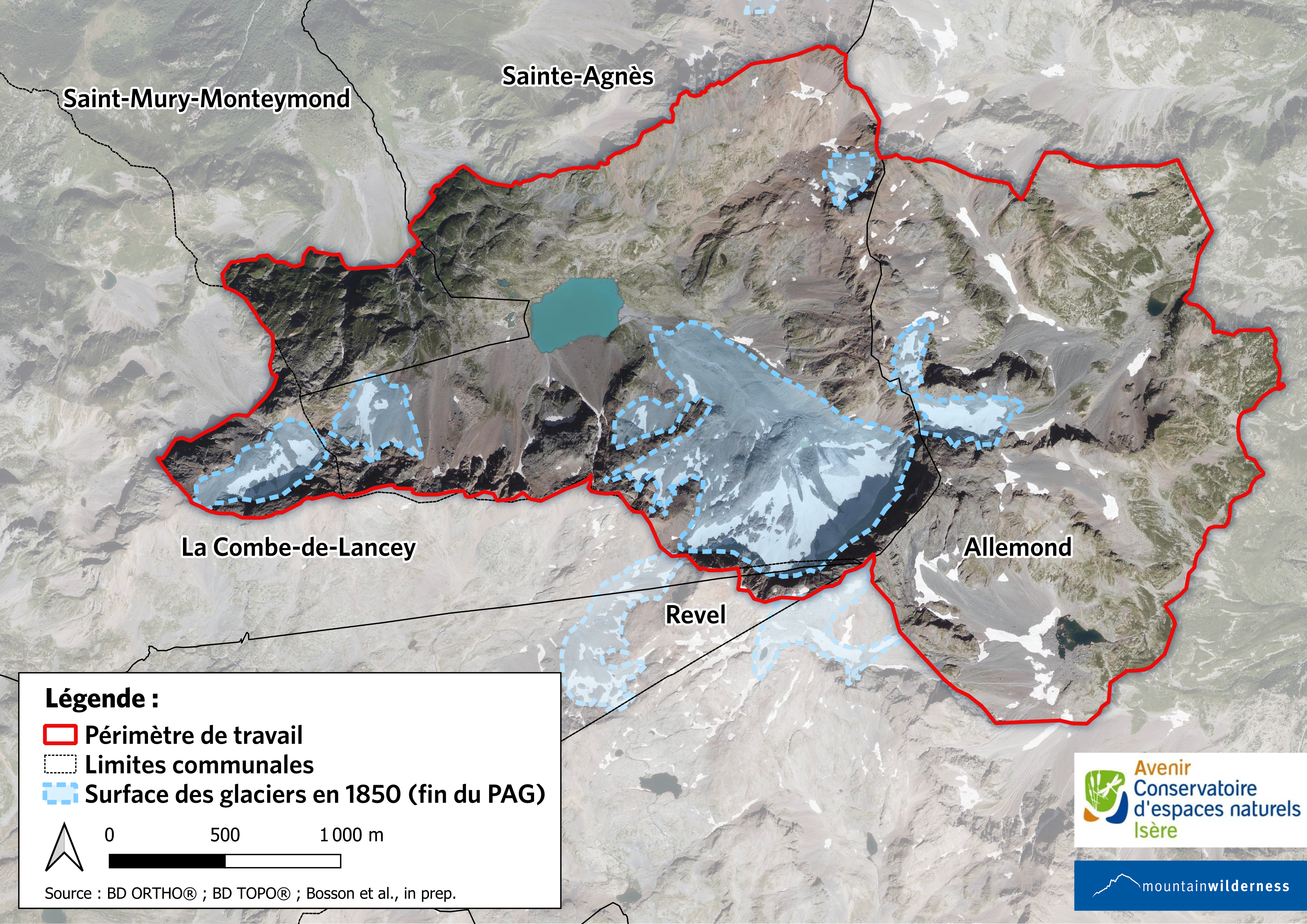
The project focuses on two complementary mountain municipalities that together form part of the same ecological system:
- Sainte-Agnès, in the Grésivaudan Valley, home to several post-glacial areas, the highest summit of the Belledonne massif, and the Freydane Glacier, the massif’s last major glacier.
- Allemond, in the Oisans region, which includes the southern slopes of the Grand Pic de Belledonne, additional post-glacial environments, and a diverse range of mountain landscapes.
Paragraphe
To ensure that the proposed conservation measures are both effective and sustainable over the long term, they must be integrated into a broader territorial strategy and supported by local authorities and elected representatives. The environmental assessment is therefore intended to provide the scientific foundation needed to advocate for the protection of the Belledonne massif’s last major glacier before the relevant public institutions.